Archives
-
According to the World Health Organization the
2022-01-19
According to the World Health Organization, the average global intake of fat has increased by 20 g per person over the last half-century [21]. However, not all fats are the same and it is now well established that saturated and unsaturated fats, as well as trans fats, can act in opposing ways to inf
-
These observations are of particular interest in
2022-01-19
These observations are of particular interest in the context of recent conceptual changes regarding the mechanisms by which different types of leukocytes contribute to atherogenesis. Over the last decade, the paradigm of the predominant circulatory origin of lesional macrophages has been challenged
-
The normal function of the FBPase enzyme
2022-01-19
The normal function of the FBPase enzyme is to catalyze the hydrolysis of F1,6BP to F6P. This activity is induced by diabetes and starvation and is increased in diabetic rats. The level of FBPase can be normalized by insulin, however, similar information is not available from diabetic patients. FBPa
-
Loss of EZH function as a consequence of
2022-01-19
Loss of EZH2 function as a consequence of nonsense or frameshift mutations has also been detected in a cohort study conducted by Jankowska et al. in chronic myelomonocytic leukemia (CMML) patients, as an early event in cancer development [43]. Although, a recent study in Japan described increased le
-
br Results br Discussion br STAR
2022-01-19
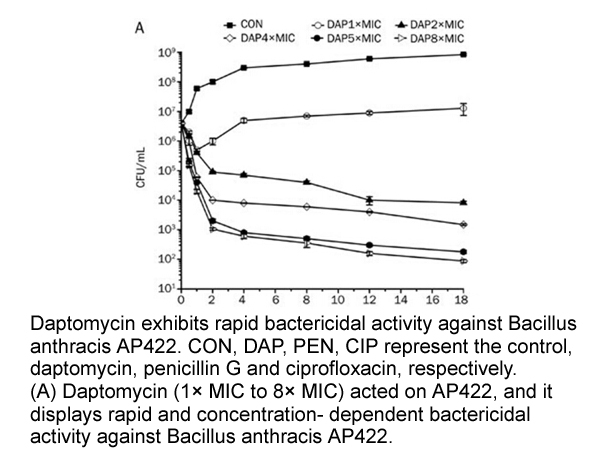
Results Discussion STAR★Methods Acknowledgments The authors thank Drs. Michael Wegner, Ron Waclaw, and Ed Hurlock for critical comments. We thank Drs. Lihui Tsai and Jiang Wu for CHD8 and ASH2L-expressing vectors, respectively, Dr. Yueh-Chiang Hu for generating transgenic lines, and Jing
-
It is an exciting time
2022-01-18

It is an exciting time for translational histamine research, since preclinical studies show potential value for histamine receptor ligands. As reviewed above, there are several concerns for future studies of histamine and its role in the CNS. 1) Because of the availability of HDC-Cre mice (Williams
-
microRNAs miRNAs of approximately nucleotides play
2022-01-18
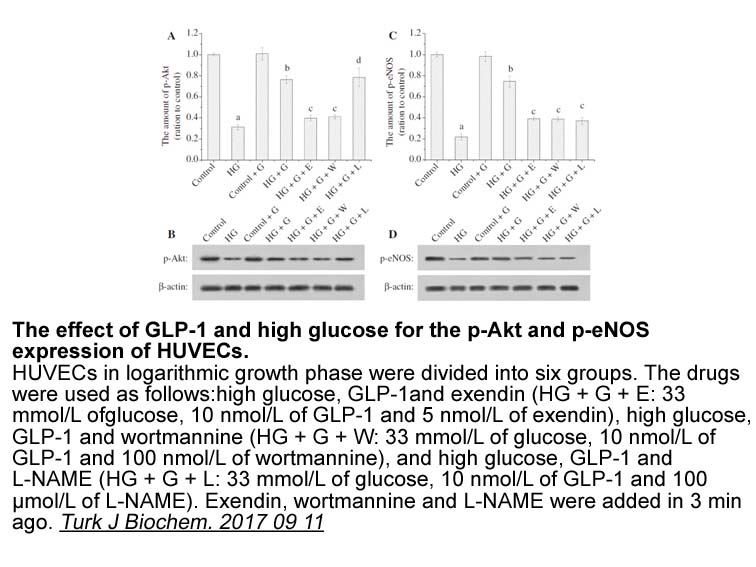
microRNAs (miRNAs) of approximately 22 nucleotides play vital roles in cancer development and progression by regulating translational repression or decay of target messenger RNAs (mRNAs) through their binding to the 3′-untranslated regions (3′-UTRs) of target mRNAs with imprecise or precise compleme
-
br cAMP cGMP effector systems in human platelets
2022-01-18
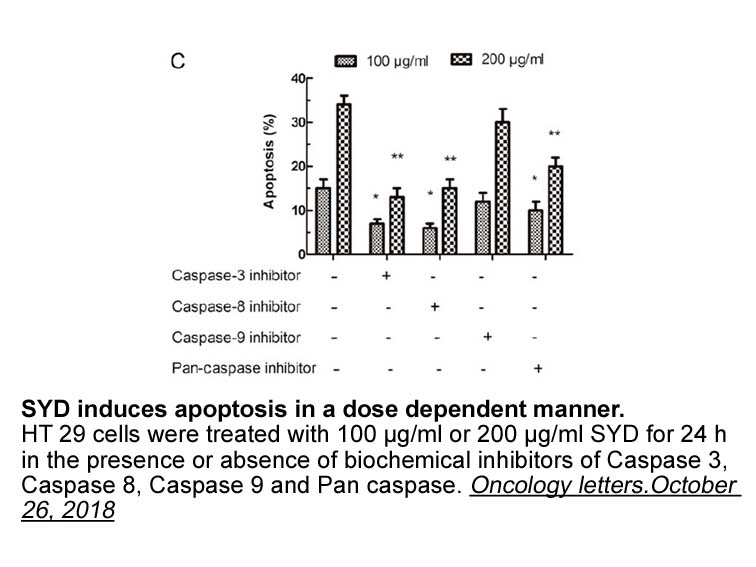
cAMP/cGMP effector systems in human platelets (PKA, PKG, PDEs) In eukaryotic cells, the effects of intracellular cAMP are mediated by two types of cAMP-dependent protein kinases (PKA type I and II) and cAMP-regulated guanine nucleotide exchange factors (EPAC/cAMP-GEF) which activate the RAS GTPas
-
br Materials and methods br Results In this study we
2022-01-18
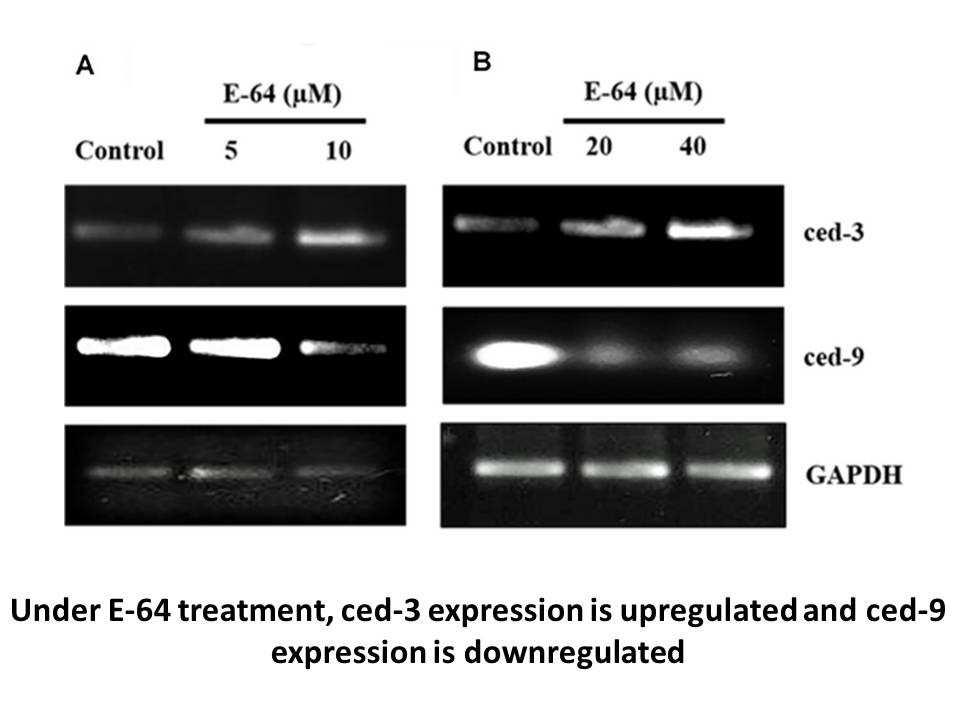
Materials and methods Results In this study we re-examined the kinetics of ET transport and tested the ability of various suggested substrates of OCNT1 to inhibit ET uptake. Using a native ET transporter expressed in the human HeLa cell line ET was found to be taken up with a Km of 51 μM and V
-
The general synthetic routes leading
2022-01-18
The general synthetic routes, leading to aspartate and 2,3-diaminopropionate analogs, are shown in . As outlined in , aspartic GW3965 sale analogs – were synthesized through standard carbodiimide-mediated coupling between an amine and an appropriately protected aspartic acid. It is worth mentioning
-
Although it is mainly a glial protein of
2022-01-18
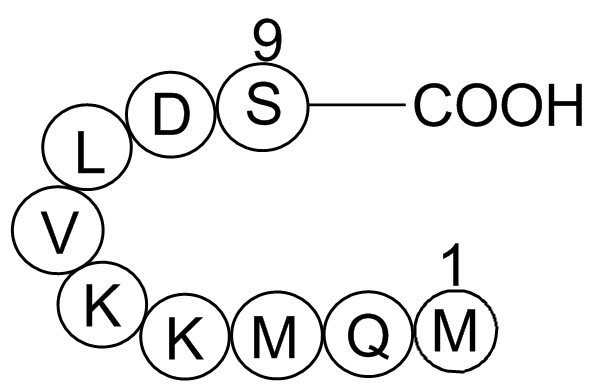
Although it is mainly a glial protein, 5–10% of total GLT-1 represents a neuronal form located at presynaptic terminals, but its physiological role remains elusive (for discussion, see (Rimmele and Rosenberg, 2016)). Nevertheless, this amount might be significant since GLT-1 has been estimated to be
-
One major issue has dominated studies of
2022-01-18
One major issue has dominated studies of the nematode connectome: its reproducibility. The difficulties that had to be surmounted just to assemble a complete wiring diagram precluded comparisons of the complete wiring from several different animals. Instead the earliest adult hermaphrodite wiring di
-
In a preliminary communication we showed
2022-01-17
In a preliminary communication, we showed that AT and ETB receptors colocalize and coimmunoprecipitate in renal proximal tubule cells, and stimulation of the AT receptor increases ETB receptor expression in Wistar-Kyoto (WKY) rats [abstract; Zeng C,, 26:80A, 2003]. We hypothesize that the ETB recept
-
Despite the increased risk for infections and the
2022-01-17
Despite the increased risk for infections and the widespread availability of vaccines, reported vaccine coverage rates among HIV-infected adult patients are low [17], [18], [19], [20], [21]. Data from two studies in the United States suggested that influenza vaccination coverage among HIV-infected p
-
br Medium and long chain fatty acid receptors br Clinical
2022-01-17
Medium- and long-chain fatty 5-Methoxy-UTP receptors Clinical studies of ω3 fatty acids Clinical studies have established that dietary intake of ω3 fatty acids should be around 4g/day for treating very high triglyceride levels (≥5.7mmol/L) [36]. Low-dose supplementation with EPA + DHA (400mg/d
3718 records 237/248 page Previous Next First page 上5页 236237238239240 下5页 Last page